Ten Technology Events to Watch From November 2026 Into 2027
The most interesting part of a technology conference is often the space between presentations. The person in a suit talking to someone with a phone, the photographer carrying a long lens across the exhibition floor, the little groups that form beside a stand and dissolve five minutes later. A conference produces an official programme, of course, but it also produces hundreds of conversations that never appear on one. Looking at this photograph, with its badge lanyards, temporary trusses and people moving in different directions, I am reminded why a crowded hall still has an advantage over another afternoon of watching presentations on a laptop.
For the next few months I have been looking across two event sites in my network, TechnologyConference.com and EventCalendar.net, for meetings that show where technology is heading. Here are ten different events worth watching, five from each site, from additive manufacturing and flash memory to hotel robots, cyber research and the big consumer electronics show. Some are for investors, some for engineers and some for the people who actually have to buy the machines. That difference is useful. It means the industry is being tested by several kinds of audiences rather than by the same crowd repeating the same slogans.
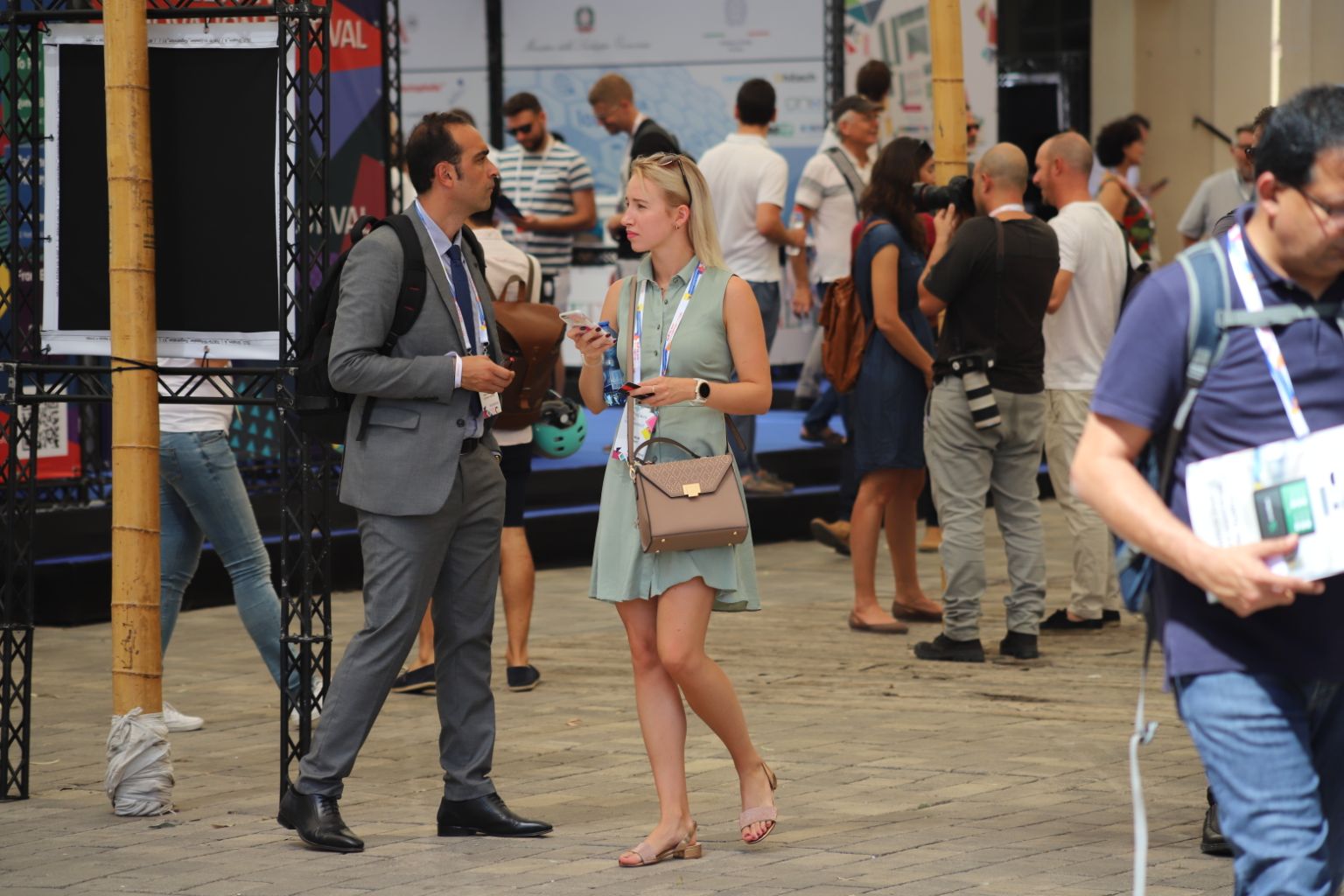
Photograph hosted by MediaGallery.org.
The earliest stop is Formnext 2026, November 17–20, at Messe Frankfurt. It is already under way as I write on November 19, and it deals with a question that is more practical than it sounds: when does 3D printing become ordinary manufacturing? Metal and polymer printers, materials, software and post-processing systems share the halls. The interesting exhibits are the repeatable parts that an aerospace supplier, a medical-device maker or a factory can actually put into production. Additive manufacturing has spent years promising flexibility. Buyers now want throughput, consistent quality and costs that work without a promotional video.
A few days later, two European shows look at the technology that makes physical infrastructure work. GENERA 2026, November 24–26, at IFEMA Madrid covers renewable energy, electricity, storage and energy efficiency, where financial savings matter as much as engineering elegance. The show includes solar equipment and monitoring systems for businesses trying to spend less on power. At roughly the same time, SPS 2026, November 24–26, in Nuremberg focuses on industrial automation. Its floor is full of drives, controllers, sensors, robotics and the software needed to make them work together. It is worth watching how much of the industrial AI discussion has become a real factory purchase instead of a prototype. Both events are reminders that some of the most important technology is hidden inside buildings and production lines.
Japan has its own pair of events that approach AI from very different ends. KIOXIA Forum 2026, November 26, at TODA Hall and Conference Tokyo turns the conversation toward flash memory, SSDs and data infrastructure. AI demands enormous amounts of storage and fast access to data, and the company is using its forum to talk about what happens beneath the applications everyone sees. Then Hospitality Tech EXPO TOKYO 2026, December 2–4, at Ariake GYM-EX brings technology down to the hotel lobby and restaurant floor. Digital check-in, reservation systems, multilingual services and cleaning or service robots are all supposed to help operators facing staffing pressure. A robot that moves well on stage is impressive. A hotel that can maintain it every day without inconveniencing its guests is a better test.
The first days of December also bring a gathering for investors and one for robot builders. The UBS Global Technology and AI Conference, November 30–December 2, in Scottsdale has scheduled appearances by Seagate, MaxLinear, CDW, Dynatrace and others. The mix of storage, chips, IT services and software provides a good check on which parts of the AI economy are seeing actual demand. Meanwhile, Humanoids Summit Silicon Valley, December 1–2, at the San Mateo County Event Center puts physical AI in front of attendees. Tesla's Optimus is part of the announced programme, along with an expanded exhibition and live demonstrations. For me, the important questions are reliability, deployment cost and what these machines can do over a complete work shift. A smooth two-minute demonstration is only a beginning.
Cybersecurity gets its own test in London. Black Hat Europe 2026, December 7–10, at ExCeL London combines training, research briefings and a business hall. AI agents, software assurance and the criminal groups responsible for high-profile intrusions are among the announced topics. This is the sort of conference where an uncomfortable technical finding should matter more than the biggest banner on the exhibition floor. With companies handing increasingly sensitive tasks to automation, a useful security meeting ought to tell us what fails, how it fails and whether anyone has a reliable fix.
The calendar then turns into 2027. CES 2027, January 6–9, in Las Vegas will spread across the city's major exhibition venues, with consumer electronics, computers, cars, robotics and AI all competing for attention. CES is loud, sometimes absurdly so, but it remains a good place to see how technologies move from a supplier's roadmap into products people can touch. Two weeks later, A3 Business Forum 2027, January 18–20, in Orlando brings senior robotics and automation executives together for a more private look at the business. The sessions focus on industry demand, investment and the outlook for manufacturers and integrators. What the big consumer show celebrates in public, the smaller industry forum has to turn into budgets and decisions.
I like seeing this range on one calendar. A storage engineer in Tokyo and a hotel operator buying service software are working on different problems, yet both are trying to make new technology function outside a controlled demonstration. So are the security researchers in London and the industrial buyers in Nuremberg. And that brings me back to the photograph. Whatever the keynote promises, someone still has to stand in a hall, ask a difficult question, compare answers and decide whether the product is any good. That exchange is what makes the trip worthwhile.